
 Deutsch
  English
  Dansk
Dansk  Español
  Italiano
  Français
  русский
  Polski


EPDs and their benefits at Eurotec
Created on: 8 January 2026
Sustainability – an increasingly important factor for businesses and the future
Sustainability has long since ceased to be a minor issue. On the contrary, it is a decisive factor for businesses, politics and society. Increasing demands for environmental and climate protection, resource scarcity and the expectations of customers, clients and other stakeholders make sustainable action indispensable today. Sustainability plays a central role, especially in the construction industry: buildings and materials are known to have an enormous impact on energy consumption, CO₂ emissions and resource use over decades.
For companies, this means combining ecological responsibility with economic performance. Transparency about the environmental impact of products is increasingly demanded and is increasingly becoming a real competitive factor. For Eurotec, EPDs are a key means of presenting the environmental impact of its products in a comprehensible manner, making sustainability measurable and providing planners, architects and builders with a reliable basis for decision-making on sustainable construction projects.
What is an EPD?
An EPD (Environmental Product Declaration) is a document that describes the environmental impact of a product throughout its entire life cycle. In Germany, EPDs are mainly issued by the Institut Bauen und Umwelt e.V. (IBU).
The basis of an EPD is the life cycle assessment (LCA), which records the environmental impact from raw material extraction through production to disposal or recycling. This results in the following typical structure in accordance with international standards such as ISO 14025 or EN 15804, so that the declarations are comparable:
- Product and organisation-related information
- Scope and system boundaries
- Results of the life cycle assessment (LCA)
- Verification and quality assurance
Why is an environmental product declaration needed?
EPDs create transparency about the environmental impact of products, building materials, etc., thus enabling products to be compared and serving as an important means of making sustainability measurable. For Eurotec, EPDs are helpful in meeting customer requirements, fulfilling projects and identifying where the greatest environmental impacts occur during production processes and where these can therefore be improved. They provide clear data for product optimisation and more efficient climate protection measures.
What does an EPD contain?
An environmental product declaration provides a variety of relevant environmental indicators, including:
- Carbon footprint (global warming potential, GWP)
- Energy consumption
- Resource consumption
- Emissions and waste
- Product lifespan
- Information on reuse/recyclability

An EPD contains both product-related and organisational information. This includes the product name, manufacturer, intended use, functional properties, and information on company locations and testing centres.
The system boundary defines which life cycle phases are taken into account. Eurotec prepares EPDs according to the cradle-to-gate principle, which covers the process from raw material extraction to leaving the factory. The information is related to a so-called functional unit, for example the service life of a product over a defined period (e.g. reference service life of a screw over 50 years).
The results of the life cycle assessment (LCA) include global/regional environmental impacts such as greenhouse potential (carbon footprint), resource and energy consumption, emissions, waste quantities and recyclability. This information is often presented in tables or graphs for each life cycle phase.
Verification and quality assurance provided by independent third parties further enhance the credibility of EPDs. They confirm that the data has been collected correctly and presented in accordance with standards. This has not yet been implemented at Eurotec.
Why does Eurotec need EPDs?
- Transparency regarding the environmental impact and CO₂ emissions of products
- Strengthening credibility and trust among customers and partners
- Identifying potential for optimisation in production
- Prerequisite for consideration in tenders and construction projects
- Basis for ecological assessments and building certifications
- Support for a long-term competition and climate strategy
An EPD is always product-related. However, the underlying environmental indicators are significantly influenced by production and business processes, i.e. the more sustainably a company operates, the better the EPDs of its products will be.
Screws with EPD in the range
Wood construction screws & stainless steel screws
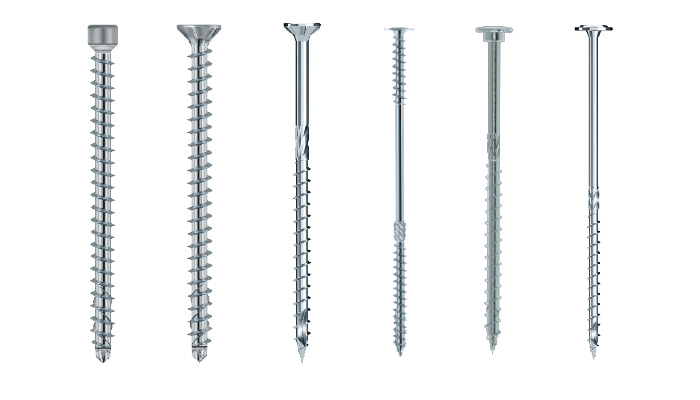
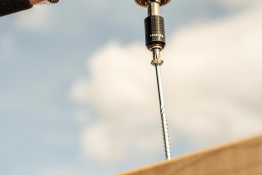
A large proportion of the wood construction screws in the Eurotec range have an Environmental Product Declaration (EPD). These include product families such as Paneltwistec, KonstruX, Topduo, LBS, WBS, Justitec, EcoTec, spacer and mounting screws, as well as other screws for load-bearing wood-to-wood and wood-to-steel connections.
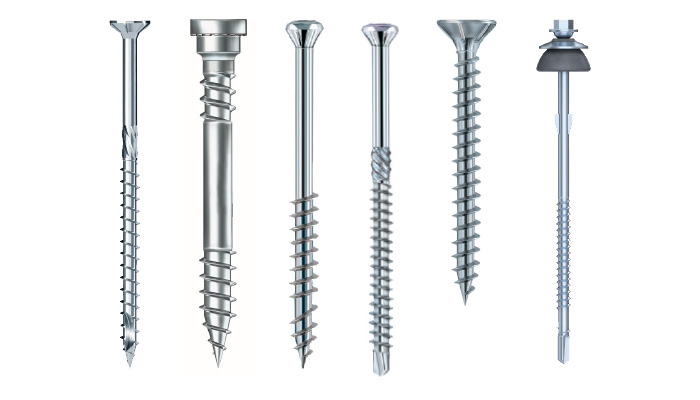
Eurotec also offers an EPD for stainless steel screws. Relevant product families include screws for structural wood connections such as Paneltwistec, decking screws, Hapatec, drill screws, Hobotec, EcoTec A2, façade screws, fixing screws and many more.
The screws mentioned are mainly used for load-bearing wood connections in timber frame construction, roof structures and interior fittings. As the environmental performance values of modules A1 to A3 differ only slightly from one another, the declaration is also made on the basis of a weight-based average product, which enables practical and standard-compliant use in building life cycle assessments.
Many variants can be installed without pre-drilling and feature self-drilling tips or sawtooth cuts, which reduce the installation effort. Most of the products have a European Technical Assessment in accordance with EN 14592 and are manufactured in standardised processes under certified quality management systems. Different dimensions and surfaces ensure suitability for indoor and outdoor use.
For more information, please refer to the official documents.
For Eurotec, the EPD is not only a tool for presenting the environmental impact of individual products, but also a strategic means of creating transparency, making sustainability measurable and securing competitive advantages. At the same time, it provides important information for the planning of environmentally friendly buildings and supports the company in implementing its climate targets.
Further detailed information on this topic can be found in our Environmental Product Declaration.

Sustainable responsibility that can be measured
Sustainability is firmly anchored in Eurotec's corporate strategy – from the selection of materials to CO₂ reduction. Find out how we systematically implement and continuously develop our ecological responsibility.

In-house production for maximum process and product transparency
Eurotec ensures consistent quality and reliability through in-house production. Discover how we manufacture our products and the processes and technologies behind them.

Do you still have any technical questions?
We’ll be happy to advise you on your construction project!
Create a ticket now so we can help you quickly and efficiently — or use our free calculation software for your planning.
Other technical articles
Here you’ll find more technical articles with comprehensive content you need to know on the construction site or for individual projects—whether you’re just getting started or already have years of experience.